
LS Swap Guide
1. Choosing the Right LS Engine (With Model Comparisons)
Pick your LS based on goals, availability, and total system cost. Rebuilding a high-mileage 5.3L can run $3,000 to $5,000 for machining and internals, which erodes the budget advantage. LS3 crate engines typically list between $7,000 and $10,000, which frames the true cost of a full refresh versus a known-good unit.
Quick picks
- 5.3L iron: budget street builds
- 6.0L iron: boosted builds and durability
- LS3 aluminum: modern NA power, huge support
- LS1 / LS2 / LS6: proven lighter-build options
- LS7: track-focused, higher complexity
Verified dropout rule
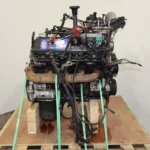
Prioritize complete, verified dropouts (engine, harness, ECU, accessories) with photos and test videos. It saves time, prevents mismatches, and avoids the “missing bracket tax.”
J & J note: We list premium pre-owned LS and late-model GM V8 options with clear photos, test videos, and a standard 30-day warranty. Name Your Own Price is available on select items.
2. Engine Mounts and Transmission Adapters
Use adjustable slider mounts for precise engine placement. Static mounts lock you into compromises on firewall clearance, pan height, and driveshaft angles. Slider mounts typically provide up to 2 inches of fore/aft adjustment.
Mount and adapter best practices
- Mock up with slider mounts first, then order exhaust and driveshaft after final placement.
- Confirm bellhousing alignment and pilot engagement on adapter setups.
- Verify torque converter spacing and use correct flexplate bolts and dowels.
- Test-fit headers or cast manifolds with mounts in final position.
Transmission strategy has shifted. ZF 8HP swaps are surging because used 8HP70 units are often $400–$800, while many 4L60E builds require a $2,500+ rebuild to be dependable. Adapter kits are commonly used to mate LS engines to ZF 8HP gearboxes.
3. Wiring Harnesses and ECU Solutions
2026 favors standalone ECU packages that reduce wiring time and improve diagnostics. Options like Haltech Nexus R3 and Holley Terminator X Max are popular because they support drive-by-wire, staged outputs, and modern strategies like PWM fan and pump control.
Programming and startup tips
- Load a known-good base calibration for injector size, MAP, and DBW before first crank.
- Use PWM outputs for fans and fuel to reduce noise and current spikes.
- Log first-start parameters to catch grounds, crank signal issues, and air leaks early.
4. Exhaust Manifolds and Headers
Modern cast swap manifolds solve clearance and heat issues while flowing well. For tight bays, cast manifolds are often the most reliable choice. Use long-tube headers where space allows and power goals justify it.
Fitment notes
- Tight bays (G-bodies, S10s, many imports) often favor cast manifolds for steering and frame clearance.
- Large muscle platforms may accept long tubes, but cast options can still help starter and floor clearance.
- Always mock up with final mounts before ordering exhaust parts.
5. Oil Pans, Pumps, and Sumps
The oil pan is the most common interference point. Stock truck pans are often too deep for many car chassis. Swap pans are designed around crossmembers and steering. Match the pickup tube to the pan and confirm O-ring integrity during assembly.
Used engine checks while the pan is off
- Inspect pickup tube seal and windage tray clearance
- Replace front and rear main seals if seepage is present
- Verify dipstick and tube compatibility with the chosen pan
6. Cooling System Upgrades
Variable-speed brushless fans with PWM control are the 2026 standard. Quality units typically cost $400–$600 and deliver quiet operation and stable current draw. Always route LS steam vents to the radiator or water pump to purge air pockets and prevent hot spots.
PWM setup essentials
- Enable PWM fan control with soft start and temperature-based duty cycles.
- Use dedicated grounds and relays (or ECU PDM outputs) to avoid voltage dips.
- Bleed with heater circuit open and confirm fan polarity before first heat cycle.
7. Fuel System and Pump Selection
Target steady 58 PSI at the rails for LS engines. PWM pump control is common in 2026 builds to reduce heat and noise, especially in returnless setups. For higher-power builds, a return-style system with an adjustable regulator is often the better move.
Line and filter tips
- Use ethanol-safe hose and PTFE fittings for modern pump gas.
- Run a 10-micron EFI filter after the pump and mount below tank level when possible.
- Update injector data in the ECU before first crank if injectors change.
8. Driveshaft and Drivetrain Modifications
Plan on a custom driveshaft after engine and transmission position are final. Budget $600–$1,000 for a quality aluminum or chromoly shaft built to correct length and yokes. Confirm slip yoke engagement and clearance at full droop and full bump.
Rear end considerations
- Mild street builds may live on stock axles and gears.
- Sticky tires and torque demand stronger axles, a quality differential, and fresh bearings.
- Address wheel hop with bushings and matched springs/shocks.
9. Gauges and Instrument Integration
Use OBDII integration to feed clean data to factory or aftermarket clusters without redundant sensors. OBDII-to-gauge modules can simplify wiring and keep diagnostics straightforward. Decide early whether you will keep factory gauges, go full digital, or run a hybrid solution.
Cluster strategy
- Confirm CAN protocol and module compatibility during ECU selection.
- OBDII data reduces extra bungs and T-fittings.
- Plan check-engine and diagnostics access from day one.
10. Must-Know Pro Tips for a Hassle-Free Swap
Set a realistic budget and stick to it. Quality LS swaps in 2026 typically land between $10,000 and $14,000 for parts, with another 20%–30% for fittings, hoses, fluids, and hardware.
Do not ignore basics
- Poor grounding is a top cause of no-starts and random faults.
- Route steam ports correctly to prevent hot spots.
- Measure oil pan clearance at ride height, not on jack stands.
- Order the driveshaft last, after mounts, transmission, and exhaust are locked in.
First-start checklist
- Confirm ECU power, grounds, and sensor references.
- Prime oil pressure with plugs out.
- Verify 58 PSI fuel pressure with no leaks.
- Calibrate DBW throttle and pedal if used.
- Warm to operating temp while logging, then recheck fluids, belt alignment, and fan operation.
Bonus: Why Buy Your LS Swap Parts from J & J Auto Wrecking?
We supply premium pre-owned, rigorously tested LS engines and components with full transparency. Listings feature high-resolution photos and professional test videos so you can see the engine run before purchase. Compression and leak-down data is provided when applicable, along with a standard 30-day warranty.